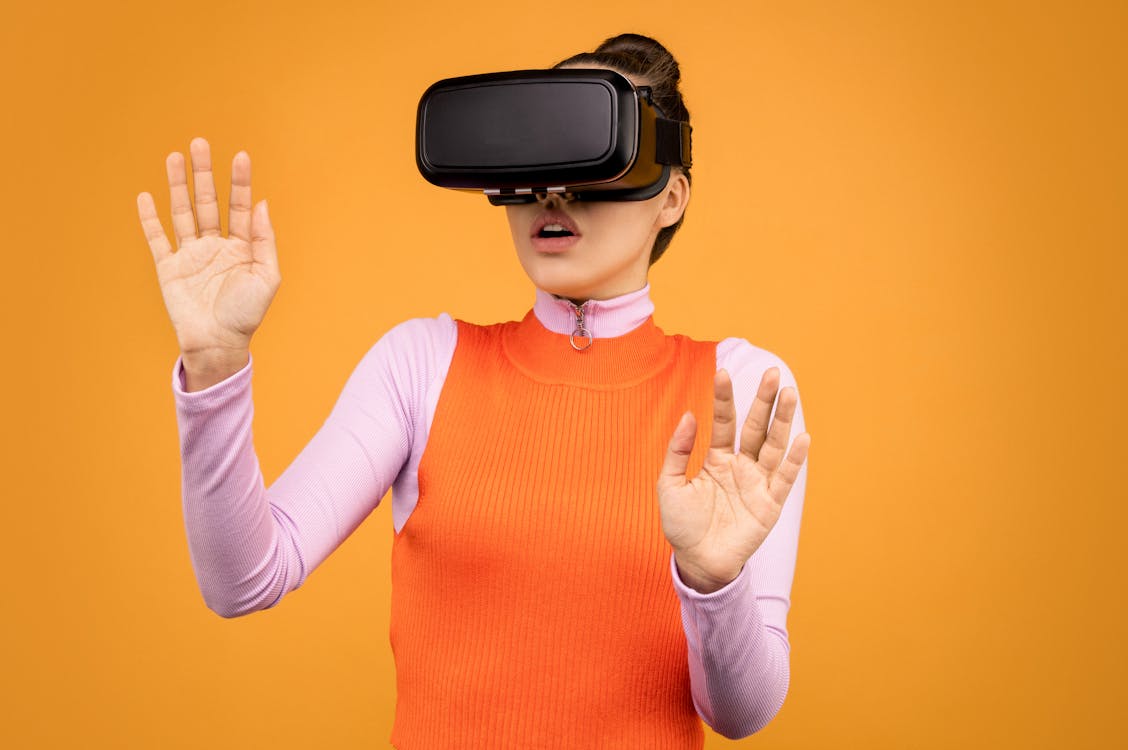
Words like “Virtual Reality”, “Augmented Reality”, “Mixed Reality” and “Immersive Content” are becoming increasingly popular. However, when speaking to agents and advertisers it is often apparent that the knowledge of the terms isn’t there as their differences and similarities aren’t always as apparent as they should be.
Immersion: Dive into virtual worlds
“Immersion” is one of the widely utilized terms, but it’s not often explained. The word originates from the world of motion pictures/film. The term “immersion” is often used to describe the process of fully immersing oneself in the world, or diving into an entirely different (artificial) realm. This is in contrast to the concept of”windows” or “windows” that can observe what is taking place “from outside”. In the realm, of VR “immersion” refers to the state in which the user does not realize that they’re actually inside an artificial reality. They experience the virtual world through all their senses. They can, unlike cinematic “immersion” experience, interact with the virtual world.
The Generic Term: “Virtual Reality” or “VR”
Virtual Reality (VR) can be a broad term used to describe media that is played with digital devices, like smartphones, HMDs (head-mounted display) as well as phones (mobile VR). It could be a linear video made with the aid of an Omni-directional camera or a 3D interactive simulation, like games and gaming, that allows the user to become immersed in the action.
YouTube brings “Virtual Real” to life through 360-degree video clips on YouTube
It’s not difficult to find a lot of “virtual reality” content on YouTube. The Google “VR Channel” is a good example, and includes an extensive collection of a vast array of stunning 360-degree videos. The 360-degree videos allow the viewer to discover the virtual world simply by using the mouse of a PC or desktop. Access to these videos via mobile is also possible. The ideal device to do this is a phone with a VR viewer, like “Cardboard” or Google’s latest “Daydream” Version. The video is split vertically so that each one gets a slightly off-centered image that our brain interprets as an illusion of 3D. This allows you to see the video from every angle and experience it as if it were in a different world. The sensors for a position on the smartphone (accelerometer, Gyro, and Compass) make sure that every move performed by the user is transferred directly to”the “virtual camera.”
There is a way to achieve an effect that is similar to 3D on smartphones without the use of a VR viewer. To achieve this, users can move the image by using “touch” by using their fingers to move across the display, much like using the mouse.
“Interactive VR” allows you to be part of the experience instead of just looking
A virtual environment that responds to the user’s actions using virtual reality is known as “Interactive VR”. This is mostly used for video gaming, however, it is also used in mobile apps. Depending on the device used, interactions can be performed through the use of the point of interaction. If the user owns an interaction controller is also equipped to perform actions such as “touch”, “hold”, “click”, “swipe” and others. This way, the elements can be moved, selected, or exchanged, without the need to access an intuitive menu.
“Augmented Reality” is its use to the actual world
Through “Augmented Virtual Reality” (AR) the virtual content can be utilized in the real world. This is possible thanks to the aid of digital devices that are used to offer information, for example, the fastest route to a certain item at the grocery store, instructions to assemble a brand shelf, or an operating manual to your Sat Nav in your car. In the world of entertainment, “AR” is commonly used to play games. Dinosaurs sitting on your coffee table appear to be alive, and virtual toy cars whizz through your living space, which you just rearranged with furniture that you have chosen from a catalog. In large part, the potential applications of “AR” depend on the gadget. The initial AR applications worked as native apps for smartphones. They simply enhanced the image of the camera by adding some information. In 2016″Pokemon Go” was a popular game “Pokemon Go” created by Niantic was a huge hit for players of all ages all around the globe “Augmented Reality” par excellence.
Project Tango from Google’s Project Tango has made impressive advances in the area of “AR.” It’s a mix of software and hardware designed for use with smartphones. The phones are fitted by additional sensors (infrared camera, sender GPS, compass camera, gyro) which allow to take and analyze the exact location of the room as well as the arrangement of the surrounding area.
“Mixed Reality”
“Mixed Reality” or “Mixed Real Reality” (MR) refers to applied to videos in which VR content is combined with and overlayed in real-time film scenes. To accomplish this, the subject in the VR is captured using green-screen technology. The location of the actual camera is then linked to the location on the VR camera. Outside parties are then able to view what the person who is in their virtual space is experiencing.
What Are the Most Important Points to Consider When Creating VR Content?
360-degree content is likely to be able to entice the viewer right beginning – the more engaging and authentic the content and the more time the user will be watching it and the more often they’ll visit. This is especially important for advertisers and brands who are looking to incorporate VR in their marketing strategies and make money from it.
To produce authentic 360-degree video content that is relevant to the viewer, it’s crucial to be aware of specific events in the journey of the customer – – also known as “moments that are important” beginning from the beginning.
Some examples could include “I’d like to test the product before buying the item”, “I want to be able to experience it as if I was actually there” or “I desire to experience the thrill of a lifetime as I’ve never had before”. This is a great method to connect with users and potential customers at the right time. This could have a positive effect on the effect of advertising and lead to capturing people’s attention, boosting brand recognition, and closing sales or earning a profit.